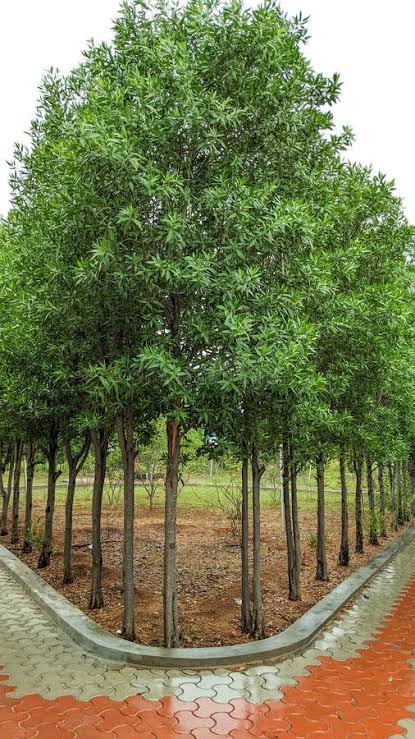
Conocarpus Lancipolius tree species banned in Gujarat, Telagana, Pune over its adverse impact
The plant species, which is widely used in public spaces for its ornamental looks but is known to have negative effects on the local biodiversity, had previously also been outlawed in Telangana.
Research reports have highlighted adverse impacts/ disadvantages of this species on environment and human health… Trees of this species flower in winter and spread pollen in nearby areas. It is learnt that this is causing diseases like cold, cough, asthma, allergy etc,”
With glossy, dark-green leaves, Conocarpus is an evergreen species. Wild herbivores or domesticated animals do not find this fast-growing species very palatable.
this species' roots penetrate deeply into the soil and spread widely, causing harm to communication lines, drainage systems, and freshwater systems.
It was also used during the plantation drive under ‘mission million trees’ in Vadodara, where 24,000 Conocarpus trees were planted in 2017-18.
This resulted in reduction of 100,000 litres per day from the groundwater reserves, the local media reported. The situation could cause water scarcity in the city, the experts had warned.
Also, the fast-growing trees were obstructing CCTV cameras, billboards, signage, hoardings, street lights and electric wires. They needed to be trimmed frequently at a huge cost.
Through activities like "farmer workshops and nature education camps," the forest department has also been instructed to increase public awareness of its "adverse impacts".
The plant doesn’t serve any purpose to the ecosystem other than beautification — no birds nest in it and it doesn’t contribute to enriching biodiversity in any way — and is hazardous to the environment and human health. So, it should not be planted.
“If Conocarpus planting is restricted to private gardens and bungalows, it’s fine. But exotic species like Conocarpus should not occupy public spaces like gardens or road medians as they eat up space where native tree species could be planted,”
- Sachin Punekar, Botanist
Would you like to share your thoughts?
Your email address will not be published. Required fields are marked *
2 Comments