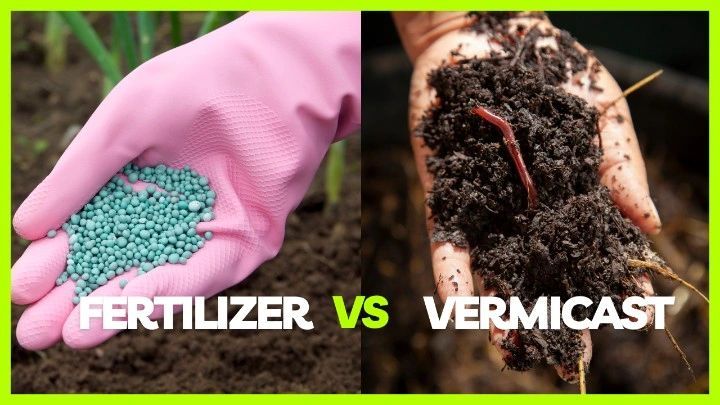
Fertilizer and vermicast are both used to improve soil fertility, but they have distinct differences
Fertilizer and vermicast are both used to improve soil fertility, but they have distinct differences:
1. Composition:
- Fertilizer: It is a synthetic or organic substance that provides specific nutrients (such as nitrogen, phosphorus, and potassium) to plants. It is formulated to deliver nutrients in a readily available form.
- Vermicast: Also known as worm castings, it is a natural, organic material produced by earthworms. It is essentially worm excrement mixed with decomposed organic matter.
2. Nutrient Availability:
- Fertilizer: Nutrients in fertilizers are usually immediately available to plants, as they are in a soluble form.
- Vermicast: Nutrients in vermicast are released slowly over time, as they are bound in organic matter and microbes play a role in breaking them down.
3. Microbial Activity:
- Fertilizer: Fertilizers may not have a significant impact on soil microbial activity, and in some cases, they can even hinder beneficial soil microorganisms.
- Vermicast: Vermicast is rich in beneficial microorganisms that help in nutrient cycling, disease suppression, and improving soil structure.
4. Soil Structure and Aeration:
- Fertilizer: It doesn't directly contribute to improving soil structure or aeration.
- Vermicast: Vermicast improves soil structure by binding soil particles together, creating a more porous and well-aerated environment for plant roots.
5. pH Regulation:
- Fertilizer: Some fertilizers can alter soil pH levels, depending on their composition.
- Vermicast: Vermicast generally has a neutral pH and helps to stabilize soil pH levels.
6. Environmental Impact:
- Fertilizer: Overuse or improper application of synthetic fertilizers can lead to environmental issues like nutrient runoff, which can harm water bodies.
- Vermicast: It is an eco-friendly and sustainable option, as it is a natural byproduct of earthworm activity.
7. Cost:
- Fertilizer: Synthetic fertilizers are often more affordable and widely available.
- Vermicast: It can be more expensive due to the time and resources required for worm composting.
8. Long-Term Soil Health:
- Fertilizer: While it provides immediate nutrient boosts, over-reliance on fertilizers can lead to soil degradation over time.
- Vermicast: It contributes to long-term soil health by improving soil structure, moisture retention, and nutrient availability.
In summary, while both fertilizer and vermicast serve to nourish plants, they have different approaches to soil improvement. Fertilizers provide quick, targeted nutrient boosts, while vermicast offers a more holistic, sustainable approach to soil health.
Would you like to share your thoughts?
Your email address will not be published. Required fields are marked *
2 Comments