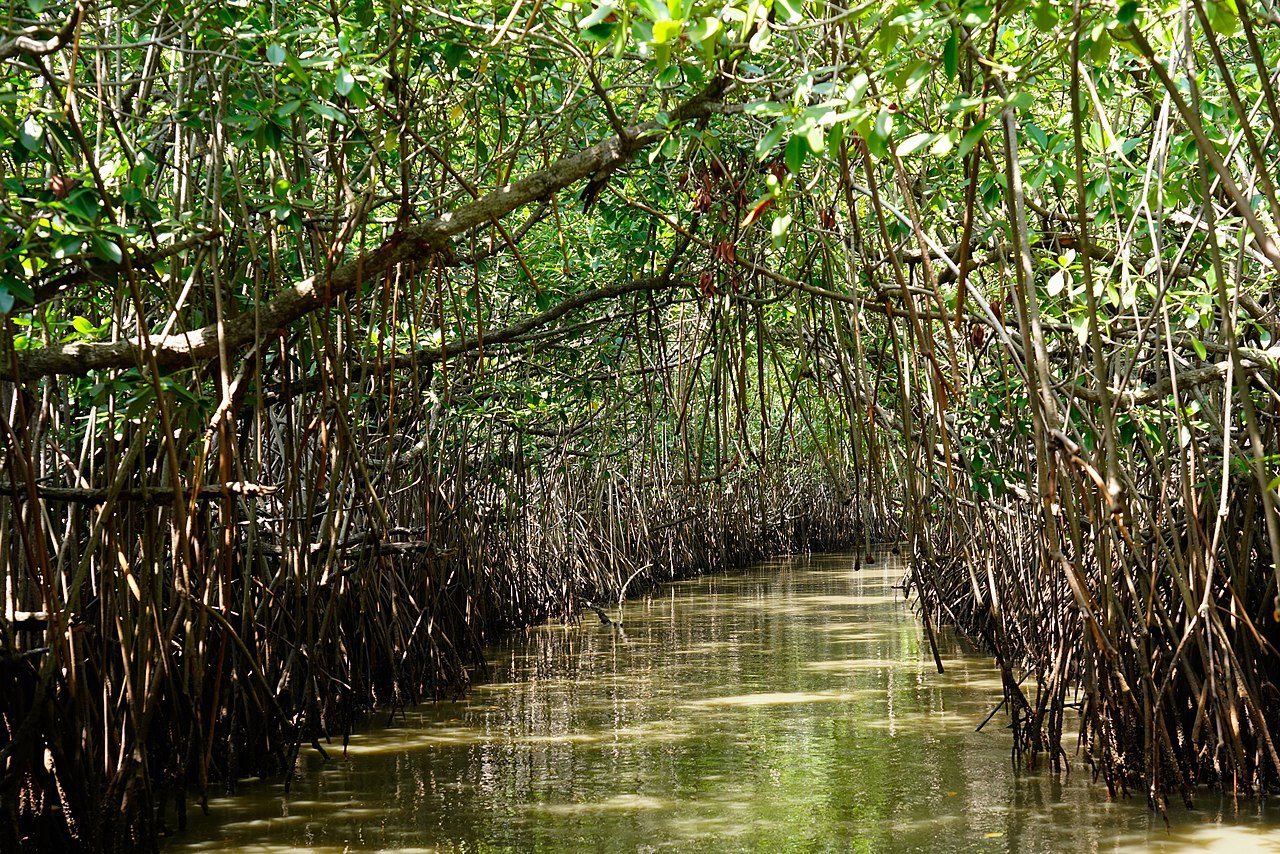
The mangrove forest cover in Tamil Nadu decreases by 4 sq km.
The area under mangrove forest cover in Tamil Nadu has shrunk by four sq km, while the overall mangrove cover in the country increased by 54sqkm, as per the latest Mangrove Cover Assessment in the India State of Forest Report 2019. Tamil Nadu’s mangrove cover is estimated to be close to 45sqkm, as against 49sqkm assessed in the last report published in 2017.
According to the ‘Mangrove Cover: 2019 Assessment’, there has been a net increase of 54sqkm in the mangrove cover comprising very dense, moderately dense and open mangroves. Of the 4,975 sq km mangrove cover in the country, West Bengal accounts for 42.45%, followed by Gujarat (23.66%) and Andaman & Nicobar Islands (12.39%). Gujarat accounted for the maximum increase of 37sqkm in mangrove cover.
Tamil Nadu has just onesqkm of very dense mangrove and about 27sqkm of moderately dense mangrove forest cover and accounts for 0.9% of total mangrove cover in India. Open mangrove cover accounts for 17sqkm in the state. As per the 2017 assessment, the state had onesqkm of very dense mangrove forest, about 25sqkm of moderately dense cover and 23sqkm of open mangrove cover. "The shrinkage in mangrove cover must be in the Muthupettai swamp and habitat degradation should be the reason,” said an ecologist, not willing to be named. Further, Tamil Nadu faced drought like situation in the last 2-3 years due to which there was hardly any exchange of sea water and fresh water. This needs to be studied, he said. “Mangroves thrive in estuaries, which facilitates inflow of fresh water that mixes with saline water from the sea in the backwater. Due to the drought, there was hardly any inflow of fresh water in the back water over there," said the ecologist. In the case of Tamil Nadu, mangrove cover is spread on the coastal belts of Cuddalore, Nagapattinam, Pudukottai, Ramanathapuram, Thanjavur, Thiruvallur, Thiruvarur and Tuticorin districts. While Thiruvarur and Thanjavur account for bulk of the mangrove forest cover at 25.1 sq km in the state, Thiruvallur accounts for the least cover at 0.91sq km.
Interestingly, mangrove cover in Thiruvarur district depleted by 3.04sqkm, the neighbouring Nagapattinam district saw mangrove cover shrink by 1.07sqkm. But, in the case of Ramanathapuram district the mangrove cover expanded by a marginal 0.16sqkm, as against onesqkm shrinkage assessed by the 2017 report. According to the report, mangroves have a complex root system, which is very efficient in dissipating the sea wave energy, thus protecting the coastal areas from tsunamis, storm usage and soil erosion. Mangrove ecosystems are under pressure due to increased human population in coastal areas and rising demand for timber.
Would you like to share your thoughts?
Your email address will not be published. Required fields are marked *
2 Comments